QA in Construction Project Management Tools: Ensuring Data Accuracy from Site to Dashboard
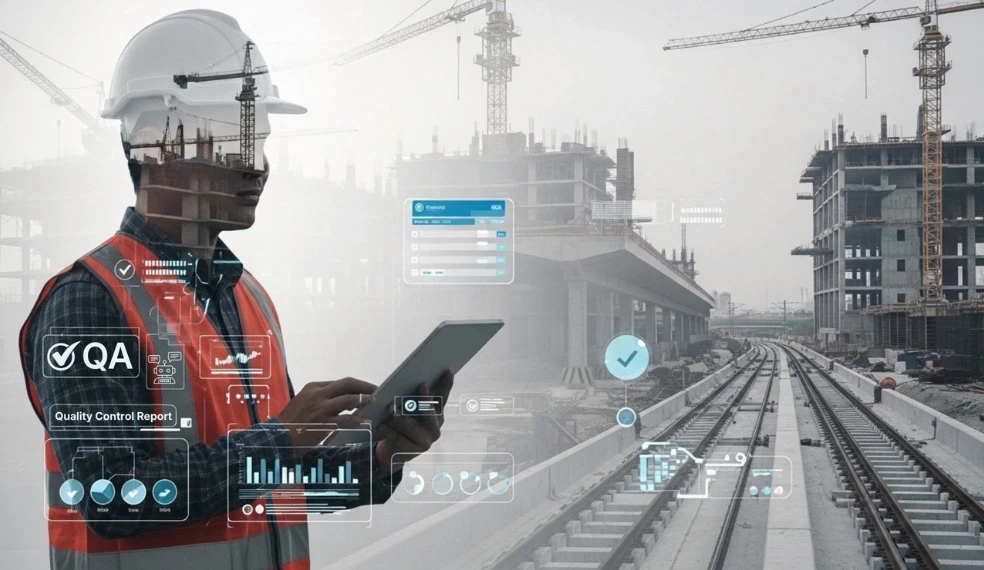
Having worked across QA leadership and Product Ownership, and now building products like LivSYT for construction firms, one thing has become very clear to me:
In Construction Project Management, data accuracy is not a “nice to have”; it directly impacts cost, timelines, and trust.
Unlike traditional software, QA in Construction Project Management Tools deals with live, evolving data flowing from multiple sources:
· Site engineers updating progress
· Vendors submitting quantities and bills
· Planning teams revising schedules
· Management tracking cost and productivity dashboards
When data breaks at any point in this journey, the impact is immediate — rework, disputes, wrong decisions, and delayed projects.
This is where Quality Assurance moves beyond feature testing and becomes a critical business function.
Why QA is Different in Construction Tools
In platforms like LivSYT, QA is not just validating screens and workflows. It is validating how accurately digital systems represent on-ground reality.
This includes:
· Whether the site data truly reflects the ground progress
· Whether quantities roll up correctly into BOQs (Bill of Quantities) and cost reports
· Whether delays, dependencies, and progress updates remain consistent across modules
· Whether dashboards tell the same story as what is happening on site
A small mismatch at the activity level can quickly cascade into incorrect cost forecasts and management decisions.
Data Accuracy: From Site Entry to Management Dashboard
From a QA perspective, the real challenge lies in ensuring end-to-end data consistency across the construction lifecycle:
· A quantity updated by a site engineer
· Flowing into activity tracking
· Impacting billing, cost, and progress
· Finally appearing correctly on leadership dashboards
QA must validate this entire data journey, not just individual screens.
This requires thinking beyond test cases and focusing on:
· Data validations across workflows
· Role-based updates and permissions
· Partial or incorrect site inputs
· Real-world usage patterns such as offline updates, late entries, and corrections
Where AI in Construction Platforms Changes the QA Game
As AI agents become part of construction platforms, the responsibility for QA expands even further.
AI can:
· Auto-suggest quantities or schedules
· Highlight risks or delays
· Generate summaries and insights
However, without strong QA oversight:
· AI outputs are traceable back to source data
· Suggestions may become generic instead of contextual
· Incorrect inputs may get amplified at scale
In construction, AI is only as good as the data beneath it, and QA serves as the final checkpoint to defend that data integrity.
QA as a Product Quality Gatekeeper
In my experience, effective Quality Assurance in Construction Project Management Tools requires more than testing expertise.
It demands:
· Deep understanding of construction workflows
· Close collaboration with product and domain teams
· Validating business outcomes, not just functionality
· Thinking like a site engineer, planner, and project manager
QA is no longer just about “finding bugs”; it plays a direct role in protecting project decisions, financial accuracy, and stakeholder trust.
Closing Thought
As construction increasingly relies on digital platforms, trust in data becomes the foundation of project success.
That trust is built quietly but critically by QA teams who understand both technology systems and construction realities.